
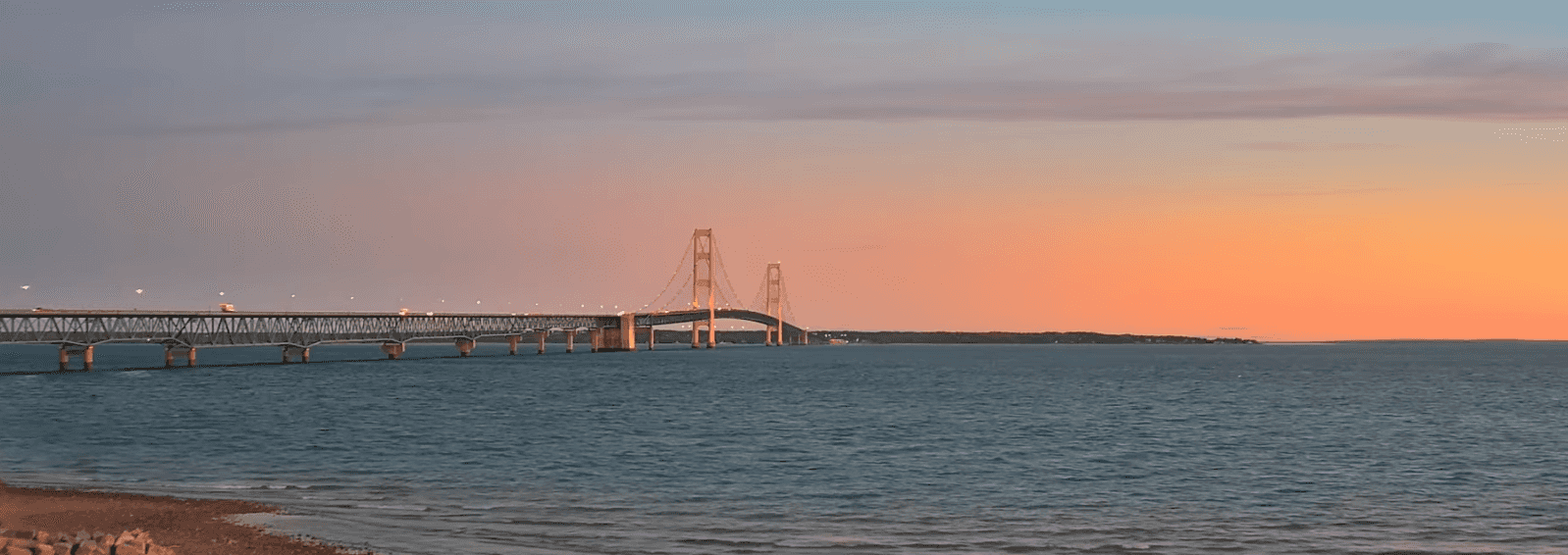
 Is this sunset over the straits of Mackinac science or poetry? I could never choose.
How Does Science Fit In Fantasy Fiction and Poetry?
I struggle with vulnerability, like many authors, because I expect a lot of criticism as someone whose writing has always been out in public. But in addressing the challenge of how open to be in sharing my life, whether it's private struggles or public victories I worry people will attack me over, I chose a unique path and wanted to dive into it a little. This topic should be interesting to anyone navigating this choice in creative work or business as a public figure or with a public facing social media. I'm hoping these thoughts resonate with someone out there.
Basically, I have been thinking a lot about how to meld the tone of my work over the years with the genres I'm working in now combining real estate and nature writing from the beach with fiction and poetry set in that location. But sci-fi is often based in hard technology, and fantasy is more magically vague, only expected to be internally consistent as a magic system. Nature writing could be romanticized or scientific, but hardly ever both. I looked into humorous field guides and other strange combos of humor and sci-fi, like the beloved Douglas Adams pioneered. Where did I end up? Well, kind of where I started--except now it makes sense.
Is Consciousness In Nature Magic or Science?
Fantasy and metaphysical poetry allow me to explore consciousness in nature, the physics of mysterious forces of nature, and the psychology and mythology (maybe the anthropology) of magic, healing arts, shamanic psychopomp, and symbolic storytelling. This all makes sense for a storyteller, because healing, psychology, and physics are all important components of symbolic storytelling or represent parallel storytelling traditions such as shamanism. For years I thought this obsession was because I was sorting out my own confusing life and navigating a health journey with an underresearched hard-to-diagnose chronic illness, but when that was sorted something hit me: this is actually about science. And maybe I can communicate that more clearly now that I understand it myself.
The thing is, I wrote for years as a journalist about climate science, mind-body wellness, healing traditions, sustainable technology solutions, and a bunch of other topics people sometimes think are virtue signalling. The burnout was real when factoring in the health challenge. People often called me a witch or told me I was possessed by the devil (yes, really, I think we're up to 3 times now, usually because I write about mermaids that some religious people think are demons). I stuck with it, because I was fascinated with exploring the nature of reality and how our minds translate reality into story, really just like my scientist and doctor ancestors--even if people often didn't understand the magical sounding language I was using. If this path had been available in more scientific fields I am sure I would have gone for the safe option, but there was no safe option in my circumstances. So I really did dive in and explore real witchcraft (not what we were taught it is at all, before the comments section gets humming with misinformed church ladies), global mythology, psychology, neuroscience of transpersonal psychology--you name it, I needed to know more about how it worked and fit together.
Why did it take me this long to realize I could articulate this obsession with esoteric topics in a much simpler way through scientific paradigms? At first I thought I couldn't let go of a type of writing that had the potential for emotional connection and depth of conversation on a meaning and purpose level. Science can be pretty dry sometimes. But then I realized I really love exploring the physics of mysteries of nature--through storytelling, I'm just a word person, not a scientist. That's really all I'm doing here, though it has many levels and side quests. Even my studies of martial arts helped me understand the mythology of enlightenment narratives and how rag-tag heroes can inspire flawed humans that a higher understanding of reality and their place in it is achievable for just about anyone. I started out wanting to figure myself out and then help other people the same way. I ended up realizing I help people just by embodying my own true passions and following my intuition on what to study and write. Life isn't so simple, there are bills to pay and whatnot, but after saving my own sanity and then life through diving through one scientific and very not scientific topic after another for years, I found that every language scientific or artistic is saying the same thing, trying to describe this strange and beautiful reality we live in. And through string theory, I actually finally got answers about connection: quantum entanglement. All that was left was to come back from the hero's journey with the elixir of a solution: understanding I wanted to embody and illustrate these truths of the scaffolding behind reality rather than pick them apart or explain them to everyone.
Science In Poetry and Magic Systems
This year's poetry seminar at the writing conference I often attend in northern Michigan (Bear River, U Michigan run) explored just this topic: where science fits in poetry in modern writing. And while I went up north expecting to explore my fascination with emotional connection with consciousness in nature, the way we used field guides and scientific research to structure or inform poetry was an eye opener for me. I just loved how an author can take a subject, run parallels with another subject, and still keep the topic in the realm of art and meaning beyond raw data and numbers. No detail needs to be thrown out as an outlier. (I often get thrown out of the data as an outlier myself, I know the feeling.) I love nuance, I love double entendres and the etymology of magical fairytale personalities of plants. I love playing with words like scientists play with test tubes, to see what happens when I combine thing A and thing B. I guess I might be a poet after all, not a healer.
I don't know how much I can dive into this topic in one post, so let me give you an example and an overview of how I blend the fantastical or shamanic intuitive experience of consciousness (since the brain processes reality as a story) with concrete images of human experience. After writing this poem, I could see the parallel: whether it's science field guide facts woven into poetry or the physics of a fantasy world magic system, or maybe poetry about fantasy characters/mythology, I seem to be doing the same thing in different ways recently: drawing parallels between these subjects through illustration rather than how-to/advocacy journalism or teaching like I used to do. Let me show you what I mean.
Sample Poem:
Crossroads
At the stop sign at night will I meet the lord or lady of the crossroads?
The crossover between life and death is as quiet as the liminal space by water meeting land heart meeting steel mind
angel teeth digging into devil hide moon-eyed owl grasping rat tail
All that's left is pellet wool
Suck the life out of your lifeline and spend it all on devotion to beauty and goodness
The woods is full of kindness even at midnight even when you are in danger until the crossroads decides if you’re trustworthy.
Notes
-
The lord and lady of the crossroads are mythical or spiritual figures from several folk magic traditions, particularly hoodoo. Regardless of your understanding of magic or spirituality, any reader can understand the symbolism of a crossroads: which direction will you go? Is the way open to you? Why do you think you would speak to a lord or lady of a crossroads? Possibly to get permission to pass a threshold and choose a new direction, right? This is how the brain processes reality as symbol and story.
-
death and life, water meeting land clearly compares two types of liminal crossroads type spaces that contrast different dimensions of reality that could form a crossroads, such as death into unknown afterlife or crossing from one environment to another as one finds on the beach.
-
heart meeting steel contrasts texture instead of spacial crossroads. angel teeth, devil hide flips the norm of aggressive demonic symbolism on its head. now the angels have teeth?
-
moon-eyed owl grasping rat tail continues the theme of predator and prey but transitions us from spiritual entities to the natural world.
-
pellet wool brings a scientific fact or natural science fact into the poem. it's one of the few concrete facts or images in the poem but still represents a condensation and dispensation of waste and consumption of value or energetic part of a formerly conscious being.
-
the next stanza brings the idea back to the author's life but flips the expectation on its head of being sucked dry... by one's self? Why devote your own life force to abstract beauty or goodness? What is good in this tapestry of strange symbols and creepy night-walking characters?
-
the woods is full of kindness at midnight flips the expectation of creepiness at night in the woods back to the familiar and comfortable while acknowledging the reader is correct to sense they are in danger, then changes the concept of guarding or "lording" over a crossroads to the idea of gatekeeping deciding if you the reader are trustworthy, rather than the cast of creepy characters.
Does any of this make sense? I'm hoping it sounds familiar to someone. It's not the easiest topic to discuss, as we all are working with slightly different definitions of all these terms I've been discussing. If you tune in this year to read or view more of my creative work, I'm hoping you can bring your own mythology to the work, so you can build your own experience dancing with words and physics like I love to do. We all bring our own experience and material to the subject matter, and I can't express how much I love that instead of finding a dogmatic one true way like I set out to find in life when much younger, I'm finding these days that the kaleidescope of perspectives and experiences people bring to reading are beautiful enough to make all this confusion and seeking worthwhile.